What Is Your Faith?

Atheism/Agnosticism
Atheism is the absence of belief in the existence of deities. Atheists reject the concept of God or gods, often based on the lack of empirical evidence for their existence. Agnosticism, while similar, holds that the existence or non-existence of deities is unknowable or currently unknown. Agnostics neither assert nor deny the existence of gods but claim that human beings are incapable of obtaining definitive knowledge about the divine. Both philosophies focus on skepticism toward religious claims and prioritize reason and scientific inquiry.

Baha'i
The Bahá’í Faith is a monotheistic religion that emphasizes the spiritual unity of all humankind and teaches that all major world religions come from the same divine source. Founded in the 19th century by Bahá’u’lláh in Persia, it teaches principles such as the oneness of God, the oneness of religion, and the oneness of humanity. Bahá’ís strive to promote equality, justice, and peace, and they place strong emphasis on moral and ethical living, the elimination of prejudice, and the harmony of science and religion. The faith also encourages regular prayer, community service, and the pursuit of knowledge, while recognizing the progressive revelation of religious truth through a series of divine messengers throughout history.

Black Hebrew Israelites
Black Hebrew Israelites are a diverse religious movement that believes African Americans and other people of African descent are the descendants of the ancient Israelites described in the Bible. They often combine elements of Judaism, Christianity, and African cultural identity, with many groups observing dietary laws, Sabbath practices, and festivals based on the Hebrew Scriptures. Beliefs and practices vary widely: some Black Hebrew Israelite communities identify closely with mainstream Judaism, while others incorporate distinctive teachings about race, identity, and prophecy. The movement is not monolithic, and groups range from peaceful, religiously focused congregations to more militant or separatist organizations.

Buddhism
Buddhism, founded by Siddhartha Gautama (the Buddha) in the 5th century BCE, is a religion and philosophy that teaches the path to enlightenment through understanding the nature of suffering and the cessation of desire. The core teachings of Buddhism are encapsulated in the Four Noble Truths and the Eightfold Path, which guide followers toward ethical conduct, mental discipline, and wisdom. Unlike many religions, Buddhism does not center around the worship of gods but emphasizes personal effort in attaining Nirvana, a state of liberation from the cycle of birth, death, and rebirth.

Christian Science
Christian Science is a religious movement founded in the late 19th century by Mary Baker Eddy. It emphasizes the belief that spiritual reality is the true reality, and that the material world—including sickness and death—is ultimately an illusion or a mistaken perception. Followers seek healing and guidance primarily through prayer and understanding of God’s spiritual laws, as taught in Eddy’s book Science and Health with Key to the Scriptures, rather than relying on medical interventions. Christian Science places a strong focus on the study of the Bible alongside Eddy’s writings and encourages adherents to live in alignment with divine principles to experience spiritual and physical well-being.

Confucianism
Confucianism is a philosophical and ethical system based on the teachings of Confucius (551–479 BCE) that emphasizes moral virtue, social harmony, and proper conduct in personal and governmental relationships. Rather than focusing on worship of deities, Confucianism centers on principles such as filial piety, respect for elders, honesty, righteousness, and the cultivation of wisdom and character. Its goal is to create a well-ordered society through ethical behavior, education, and the fulfillment of social roles. Confucian thought has historically influenced Chinese culture, law, politics, and education, and continues to shape social values and community life in many East Asian societies today.

Gnosticism
Gnosticism is an ancient religious and philosophical movement that emphasizes esoteric knowledge (gnosis) as the path to spiritual enlightenment and salvation. Gnostics believe that the material world is the creation of a lesser, often malevolent deity, and that true spiritual knowledge allows individuals to transcend the physical realm and reconnect with a higher, divine source. While there are many Gnostic sects, they often share the belief that human beings contain a divine spark that can be awakened through mystical insight, and that this knowledge is hidden from most people.

Hinduism
Hinduism is one of the world's oldest and most diverse religions, originating in the Indian subcontinent. It is a complex belief system that encompasses a wide array of gods, spiritual practices, and philosophical schools. Central to Hinduism are the concepts of karma (the law of cause and effect), dharma (righteous duty), and moksha (liberation from the cycle of rebirth). The religion includes a variety of texts, the most well-known being the Vedas, Upanishads, Bhagavad Gita, and Ramayana. Hindus believe in a cyclical view of time, where souls undergo numerous rebirths before achieving moksha.
Islam
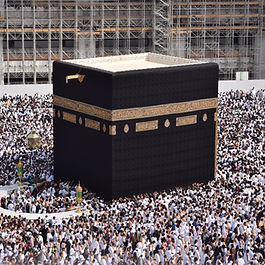
Islam is a monotheistic faith that believes in the worship of Allah (God), revealed through the prophet Muhammad, who is considered the last and final prophet. The central text of Islam is the Qur'an, believed to be the literal word of God as revealed to Muhammad. Followers of Islam, known as Muslims, practice the Five Pillars of Islam, which include belief in one God, prayer, fasting, charity, and pilgrimage to Mecca. Islam teaches that salvation is attained through submission to the will of Allah, and it encompasses both a personal faith and a system of law known as Sharia.

Jehovah's Witness
Jehovah’s Witnesses consider themselves a Christian denomination that believes in the exclusive worship of Jehovah, the name they use for God. They believe that God's Kingdom was established in heaven in 1914 and that only Jehovah's Witnesses are true Christians, while all other Christian denominations are considered false. Their beliefs emphasize the imminent end of the world, with only faithful Jehovah's Witnesses being saved. They reject practices such as blood transfusions, military service, and celebrating holidays. Their interpretation of the Bible is unique, and they often engage in door-to-door evangelism.

Judaism
Judaism is one of the oldest monotheistic religions, with a history dating back over 3,000 years. It is centered on the belief in one God who made a covenant with the Jewish people, as revealed in the Hebrew scriptures, particularly the Torah. Jews believe that they are God's chosen people and that they must follow the commandments and laws given in the Torah. Judaism is both a religion and an ethnic identity, with practices such as the observance of the Sabbath, dietary laws (kashrut), and the celebration of religious holidays like Passover and Yom Kippur.

Mormonism
Mormonism, or The Church of Jesus Christ of Latter Day Saints, considers itself a Christian denomination founded in the early 19th century by Joseph Smith in the United States. Mormons believe that Smith restored the true church of Jesus Christ, which had been lost after the death of the apostles. Central to their faith is the Book of Mormon, which they believe is a second volume of scripture alongside the Bible. Mormons practice baptism for the dead, believe in modern-day prophets, and emphasize the importance of family and personal revelation. They have distinctive beliefs about God, viewing the Father, Son, and Holy Spirit as separate beings rather than a unified Trinity.

New Age
The New Age movement is a spiritual and cultural movement that emerged in the late 20th century, emphasizing a blend of spiritual practices, personal growth, and holistic health. It incorporates elements from a wide range of traditions, including Eastern philosophies, Western occultism, and indigenous practices, and often focuses on concepts like astrology, reincarnation, energy healing, and the pursuit of enlightenment. New Age adherents generally believe in the interconnectedness of all life and the potential for individuals to tap into higher spiritual awareness and transformative power.

Orthodox
Eastern Orthodox Christianity is a branch of Christianity that emphasizes the continuation of the ancient traditions of the early Church. It is characterized by its liturgical worship, which is highly ritualistic and centers on the sacraments. The Eastern Orthodox Church is organized into a family of autocephalous (independent) national churches, all of which recognize the authority of the Ecumenical Patriarch of Constantinople in a spiritual, but not governing, sense. Eastern Orthodox Christians believe in salvation through a combination of faith, grace, and works, with a strong emphasis on the transformative power of the sacraments.

Paganism
Paganism is a broad term used to describe a variety of religious traditions and spiritual practices that are typically polytheistic, nature-centered, or rooted in ancient cultural customs. It often involves the worship of multiple gods and goddesses, spirits, or natural forces, and can include rituals, festivals, and offerings to honor these deities. Many forms of paganism emphasize the cycles of nature, the sacredness of the earth, and the interconnectedness of all life. Pagan beliefs vary widely depending on cultural and historical context, ranging from ancient Roman, Greek, and Norse religions to modern revivals such as Wicca or Druidry. It generally lacks a central scripture or universally accepted dogma, instead focusing on personal experience, tradition, and communal practices.

Rastafarianism
Rastafarianism is a religion that emerged in Jamaica in the 1930s, rooted in a blend of Afrocentric beliefs, Christianity, and the rejection of colonial oppression. It centers on the veneration of Haile Selassie I, the former emperor of Ethiopia, whom Rastafarians consider the earthly manifestation of God. Followers believe in the eventual repatriation of the African diaspora to Africa, and they view the United States and other Western nations as Babylon, a symbol of oppression and corruption. Rituals often include the use of cannabis, which is considered a sacrament, and the wearing of dreadlocks.

Roman Catholicism
Roman Catholicism is the largest branch of Christianity, with a hierarchical structure led by the Pope, considered the spiritual leader and successor to Saint Peter. Catholics believe in the authority of the Pope, the sacraments (especially the Eucharist), and the traditions of the Catholic Church, which they believe are guided by the Holy Spirit. Central to Catholic teaching is the doctrine of salvation through faith and works, the importance of saints, and the veneration of the Virgin Mary. Catholics follow the teachings of the Bible, as well as the Magisterium, which includes the official teachings of the Catholic Church.

Santa Muerte
Santa Muerte, or “Holy Death,” is a folk religious devotion that originated in Mexico and has grown in popularity throughout Latin America and among some communities in the United States. Devotees venerate Santa Muerte as a skeletal figure representing death, seeking her protection, guidance, and favors in areas such as health, wealth, love, and justice. The faith blends elements of indigenous Mexican beliefs, Catholicism, and folk spirituality, often incorporating rituals, altars, candles, offerings, and prayers. While not officially recognized by the Catholic Church, Santa Muerte has developed a significant following, particularly among marginalized groups, who view her as a compassionate and accessible spiritual figure who listens to their petitions.

Santeria
Santería is an Afro-Caribbean religion that developed primarily in Cuba, blending elements of traditional Yoruba beliefs from West Africa with Roman Catholicism. Its followers worship a pantheon of deities known as orishas, each associated with specific aspects of nature, human traits, or life events, and often corresponding to Catholic saints. Santería emphasizes rituals, offerings, drumming, dancing, and divination as ways to communicate with the orishas and seek guidance, protection, or blessings. Ancestor veneration, spiritual cleansing, and community ceremonies are also central to the practice, which functions as both a religious and cultural tradition for many adherents.

Satanism
Satanism encompasses a range of ideological, philosophical, and spiritual beliefs that generally emphasize individualism, self-empowerment, and the rejection of traditional religious doctrines. There are two main branches: LaVeyan Satanism, which is atheistic and promotes self-interest, rationality, and personal development as central tenets, and Theistic Satanism, where adherents believe in and worship Satan as a deity or supernatural being. Many Satanists simply view it as a symbolic rejection of religious authority and societal norms.

Scientology
Scientology is a religion founded by science fiction writer L. Ron Hubbard in the 1950s. It teaches that humans are spiritual beings (thetans) who are distinct from their minds and bodies. Scientologists believe that individuals can achieve spiritual freedom and enlightenment through a process called auditing, which involves addressing past traumas (or "engrams") in order to become a "Clear." The religion has been controversial due to its secretive nature, aggressive tactics against critics, and its high financial costs. Scientology teaches that through its teachings, individuals can overcome the negative influences of their past and reach their highest potential.

Shinto
Shinto is the indigenous spiritual tradition of Japan, centered on the worship of kami, which are spirits or deities believed to inhabit natural phenomena, objects, and ancestors. It emphasizes ritual practice, purification, and the maintenance of harmony between humans, nature, and the spiritual world, rather than a strict set of doctrinal beliefs. Shinto is often intertwined with cultural customs, festivals, and local shrines, serving both as a religious and social framework for Japanese life. Rather than focusing on salvation or a moral code imposed by scripture, Shinto encourages reverence for nature, respect for ancestors, and participation in communal rituals that honor the divine presence in everyday life.

Sikhism
Sikhism is a monotheistic religion founded in the late 15th century in the Punjab region of South Asia by Guru Nanak and developed through the teachings of ten successive Gurus. Sikhs believe in one God who is eternal, formless, and beyond human comprehension, yet accessible to all through devotion and meditation. Central to Sikh practice is the emphasis on honest living, selfless service, equality, and social justice. The faith is guided by the teachings of the Guru Granth Sahib, the Sikh holy scripture, which contains hymns and writings that instruct followers on how to live a righteous life, remember God, and cultivate spiritual discipline. Sikhism also rejects ritualism and caste distinctions, encouraging its adherents to seek a personal connection with God through prayer, meditation, and ethical action.

Taoism
Taoism, also spelled Daoism, is a philosophical and religious tradition that originated in ancient China and emphasizes living in harmony with the Tao (or “Way”), which is understood as the fundamental principle underlying the universe. Taoism teaches that the natural world is interconnected and that humans should align themselves with its rhythms through simplicity, humility, and balance. Central concepts include wu wei (effortless action or non-forcing), the cultivation of virtue, and the pursuit of longevity and spiritual harmony. Taoist practice often incorporates meditation, breathing exercises, rituals, and reverence for nature and ancestors. Over time, Taoism developed both philosophical schools, focused on ethical living and understanding the Tao, and religious practices, including temples, priests, and rituals for health, protection, and spiritual cultivation.

Universalism
Universalism is a religious belief system that emphasizes the eventual reconciliation of all people to God, asserting that no soul is ultimately condemned to eternal punishment. Universalists often hold that God’s love and mercy are so encompassing that, regardless of a person’s actions or beliefs in this life, every individual will ultimately experience salvation or spiritual restoration. Some forms of universalism focus on the idea that God may use correction, purging, or transformative experiences after death to bring about redemption, while others emphasize the inherent goodness of humanity and the ultimate triumph of divine grace. Although universalism has roots in both Christian and non-Christian thought, it is most commonly discussed today in the context of a theologically liberal interpretation of Christianity.

Voodoo
Voodoo, often spelled Vodou or Vodun, is an African diasporic religion primarily practiced in Haiti, parts of the Caribbean, and Louisiana. It blends elements of West African spiritual traditions, Roman Catholicism, and indigenous beliefs, emphasizing a close relationship with spiritual beings known as loa or lwa, who serve as intermediaries between humans and the supreme creator, Bondye. Rituals often involve music, dance, drumming, and spirit possession, where practitioners communicate with these spirits for guidance, healing, protection, or assistance in daily life. Ancestor veneration is also central, and offerings or ceremonies are used to honor both spirits and the departed. Voodoo is a highly community-oriented faith, with practices and beliefs varying by region and lineage, and it integrates spiritual, social, and cultural elements into everyday life.

Wicca
Wicca is a modern pagan religion that emphasizes the worship of nature, particularly the Earth and its cycles, as well as the veneration of both a goddess and a god. It is a polytheistic faith with rituals that include the use of magic, prayer, and festivals tied to the solar and lunar cycles. Wiccans often follow the "Wiccan Rede," which advises harm none, and the "Threefold Law," which suggests that whatever energy one sends out will return three times over. Wicca gained widespread popularity in the 20th century, especially after the publication of works by figures like Gerald Gardner.

World Mission Society Church Of God
The World Mission Society Church of God (WMSCOG) is a religious organization founded in South Korea in 1964 by Ahn Sahng-hong, a former Seventh-day Adventist member. The church teaches that Ahn Sahng-hong is the Second Coming of Christ and that a woman named Zahng Gil-jah, referred to by members as “God the Mother,” is the female aspect of God who completes the divine image alongside “God the Father.” WMSCOG emphasizes observing the Sabbath on Saturday, celebrating the Passover as a central sacrament, and following what it describes as the “New Covenant” teachings restored by Ahn Sahng-hong. WMSCOG is known for its active evangelism, with members often sharing their faith in public spaces and inviting people to Bible studies at their local churches. The group claims to have millions of members worldwide and operates thousands of branches in various countries.

Zoroastrianism
Zoroastrianism is one of the world’s oldest known monotheistic religions, originating in ancient Persia (modern-day Iran) around the 6th–7th century BCE. It was founded by the prophet Zoroaster (or Zarathustra) and centers on the worship of Ahura Mazda, the supreme god who embodies truth, light, and goodness. Zoroastrianism emphasizes the cosmic struggle between Ahura Mazda and Angra Mainyu (the destructive spirit or force of evil), teaching that humans play a role in promoting good through righteous thoughts, words, and deeds. Key practices include prayer, ritual purity, and the use of fire as a symbol of divine presence, while its ethical focus stresses honesty, charity, and responsibility for maintaining cosmic order. The religion has historically influenced other faith traditions and remains practiced by communities in Iran, India (Parsis), and the diaspora.